
A Story That Grows Like Moss Between Words
There are books you read.
And then there are books that quietly rearrange something inside you—like furniture in a room you thought you knew.
Hamnet is very much the second kind.
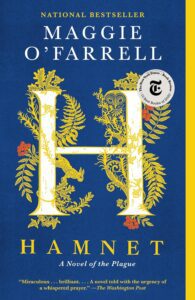
A boy, a name, and everything unsaid
The novel circles around the death of a boy—Hamnet, the son of William Shakespeare—but it never behaves like a history lesson. Instead, it moves like wind through tall grass. It is about grief, yes—but also about:
- a mother who understands the language of plants better than people
- a father who escapes into words
- a twin bond that feels like a mirror split in two
And somewhere in the background, almost like a whisper, a play begins to take shape… Hamlet.
Agnes — the quiet witch of the woods
If this book has a heartbeat, it is Agnes. She is not loud. She is not dramatic. She simply knows things—about roots, about weather, about people.
Reading her feels like:
- walking barefoot through a damp garden
- touching leaves you’re not supposed to know the names of
- realizing that knowledge can be soft, not sharp
She belongs perfectly in that magic plant cottagecore world—the one where everything grows slowly and nothing is accidental.
The ghost inside the story
Here’s the quiet trick of the book: It never tells you directly, but it lets you feel that Hamnet becomes Hamlet.
A name shifts.
A story transforms.
Grief turns into art.
And suddenly, Hamlet doesn’t feel like a distant prince anymore. It feels… human. Even—dare we say—reinterpret-able.
A Hamlet who could just as easily be a woman. A Hamlet who carries grief in her bones instead of a crown.

The Wonder to Take With you
In Hamnet, a name becomes a story… and a story becomes something bigger. Now it’s your turn.
Write down one word that feels important right now. It can be a name, a feeling, a place – something small but persistent.
Answer quickly, without overthinking:
- What does this word hold?
- What does it hide?
- What does it want?
Write 3 short sentences. Now transform your word into something else. Complete this sentence: “This is not about ______. It is about ______.”
